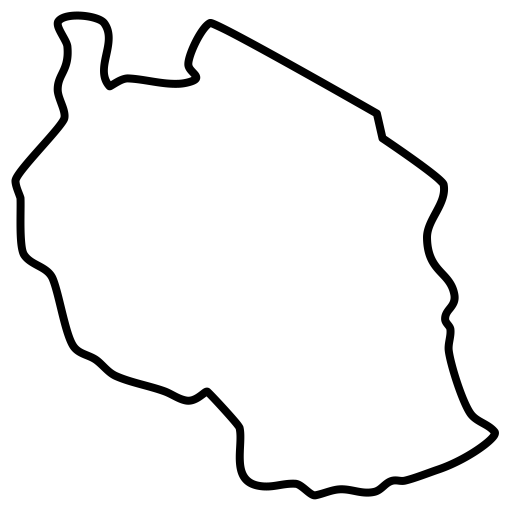
Kenya and Tanzania deliver some of Africa’s most legendary safari experiences if you’ve dreamed of golden grasslands and the heart-stopping thrill of witnessing wildlife on an epic scale. Together, they’re home to the Great Migration, incredible big cat sightings, and some of the continent’s most celebrated landscapes – but done right, they offer far more than the usual safari clichés.
Remote, low-impact safari experiences far from the crowds.
Elephants, lions, hippos, crocodiles, wild dogs, leopards, and remarkable birdlife.
A safari setting unlike anywhere else in Africa, best explored by mokoro and boat.
The real magic often lies beyond the headline destinations in the quieter conservancies and more exclusive safari areas.
Kenya or Tanzania are the best places to begin if you want the classic East African safari experience.
Kenya and Tanzania can be extraordinary, but they can also be some of the easiest places to get safari wrong. Go to the wrong place at the wrong time, and you may find yourself in a line of vehicles rather than in the wild.
That’s why where you stay, when you travel, and how you build your itinerary matters so much here. The best experience often comes from looking beyond the obvious, whether that means choosing a private conservancy in Kenya or heading to the quieter corners of Tanzania where safari still feels wonderfully wild.
We’ll help you experience the drama and beauty these destinations are famous for, without the chaos or the safari traffic jam.
High season (typically January to February and June to September) is the classic time to visit Kenya and Tanzania, with drier conditions, easier wildlife spotting, and access to some of East Africa’s most iconic safari experiences.
In Kenya, this is when the Maasai Mara is often at its busiest, especially during the Migration months, so it’s well worth considering the surrounding private conservancies if you want the same wildlife-rich landscapes with a more exclusive feel. Amboseli is also a fantastic choice in the drier months, with large elephant herds and those famous views of Kilimanjaro, while Samburu and Laikipia can be excellent for travellers wanting something a little different from the classic Mara circuit.
In Tanzania, high season is ideal for the Serengeti, particularly if the Great Migration is high on your wish list, but timing is key depending on where the herds are moving. This is also a superb time for the Ngorongoro Crater and Tarangire, where game viewing is often excellent. If you’re looking for something wilder and less obvious, Ruaha is particularly rewarding in the drier months, from July onwards, while Nyerere offers a more adventurous safari with boating and walking as well as traditional game drives.
Low season (usually March to May, and November to December) brings greener landscapes, dramatic skies, fewer travellers, and excellent birding. It can be a beautiful time for photography and for travellers who prefer safari with a softer, quieter feel.
In Kenya, this can be a lovely time to experience the private conservancies, Laikipia, and Samburu, where the pace feels calmer and the scenery is lush and refreshed. While the Maasai Mara can be quieter and greener at this time of year, wildlife is often more spread out, and road conditions can be more challenging depending on the rains.
In Tanzania, low season can work beautifully in areas like Tarangire and the broader northern circuit if you don’t mind some rain and want better value. The Serengeti can still be spectacular depending on the timing of the Migration, while Nyerere and Ruaha may be more affected by seasonal rains and access, so planning carefully matters.
Shoulder season (often late May to early June, and October to early November) can be one of East Africa’s smartest times to travel, offering a very appealing balance of wildlife, value, and fewer crowds.
In Kenya, this can be a particularly good time to focus on private conservancies, Laikipia, and Amboseli, where you may still enjoy excellent wildlife viewing without the pressure and price tag of peak season. It can also be a rewarding time for the Maasai Mara just before the busiest Migration period begins, especially if you want the landscapes and wildlife without the heavy vehicle traffic.
In Tanzania, shoulder season can work beautifully in Tarangire, the Ngorongoro Crater, and parts of the Serengeti, depending on what the Migration is doing at that point. It’s also a strong option for travellers wanting a slightly quieter northern Tanzania safari, while some of the more remote southern parks need a more careful eye on conditions.
Kenya’s most famous safari destination, known for having one of Africa’s highest lion densities and for Great Migration season drama.
Samburu County forms Kenya’s arid northern frontier, spanning a vast semi-desert landscape. It’s home to the Samburu people and is renowned for its unique, arid-adapted wildlife, most notably the “Samburu Special Five”: Reticulated Giraffe, Grevy’s Zebra, Beisa Oryx, Somali Ostrich, and long-necked Gerenuk.

Renowned for its wildlife conservation efforts and biodiversity, including thousands of elephants. It spans about 9,500 square kilometres on a highland plateau, straddling the equator between Mount Kenya and the Great Rift Valley.
A national park famous for its huge elephant herds (and the legendary “super tuskers”) and its iconic views of Mount Kilimanjaro.
Tanzania’s iconic wilderness, a UNESCO World Heritage site, and one of the best places in Africa to witness the movement of the Great Migration.
Another UNESCO World Heritage Site and the world’s largest intact, unfilled volcanic caldera, spanning 260 square km. A dramatic, wildlife-rich setting unlike anywhere else.
For a quieter, more varied Tanzanian safari, with beautiful landscapes, ancient baobabs, and one of Tanzania’s densest elephant populations.
A huge, remote national park in south-central Tanzania, with very few camps in relation to its size, notable for unusual mixes of East and Southern African species, including greater and lesser kudu, sable antelope, and roan antelope. Ruaha-Katavi forms one of Africa’s top three wild dog strongholds, and the park also hosts some of Tanzania’s biggest elephant herds and a tenth of Africa’s lion population.
Tanzania’s sprawling southern wilderness, best known for the Rufiji River, boat safaris, and a much quieter feel than the northern safari circuit.
Speak to our Africa experts and let’s create your East African adventure.